VCF Montréal 2026 2.0
Every year, I read accounts of people’s trips to VCF East and West (Vintage Computer Federation), and think: I’ve got to find a way to get to one of these events.
When VCF Montréal 2026 2.0 was announced, I decided to go - its so much easier for me to get to than VCF East/New Jersey. I’m on my way back to Toronto by train and writing my thoughts while it is still fresh!
Day 1
On Day 1 - I just attended talks.
Christine Finn - Computing and Archaeology
The first was from Christine Finn, author of Artifacts: An Archaeologist’s Year in Silicon Valley. She tells the story of travelling to Silicon Valley to visit a friend after wrapping up her PhD in archaelogy in the 1990s. On the flight, the person beside her is reading an email on a Palm device. She asks “When did that come out?”, and the person responds “It’s coming out tomorrow”. She recognized that a big thing was happening, and thought it would be interesting to document, from an archaelogist’s perspective.
Tom Jennings - The Importance of Amateurs
The next talk was from Tom Jennings, best known for the work that lead to FidoNet. His talk was really about the importance of amateurs - curious individuals, sometimes working together, at the forefront of new ideas, playing around and demonstrating what can work. They can build valuable things that can seem impossible or unviable by commercial firms.
ReBoot Rewind - Recovering Master Tapes
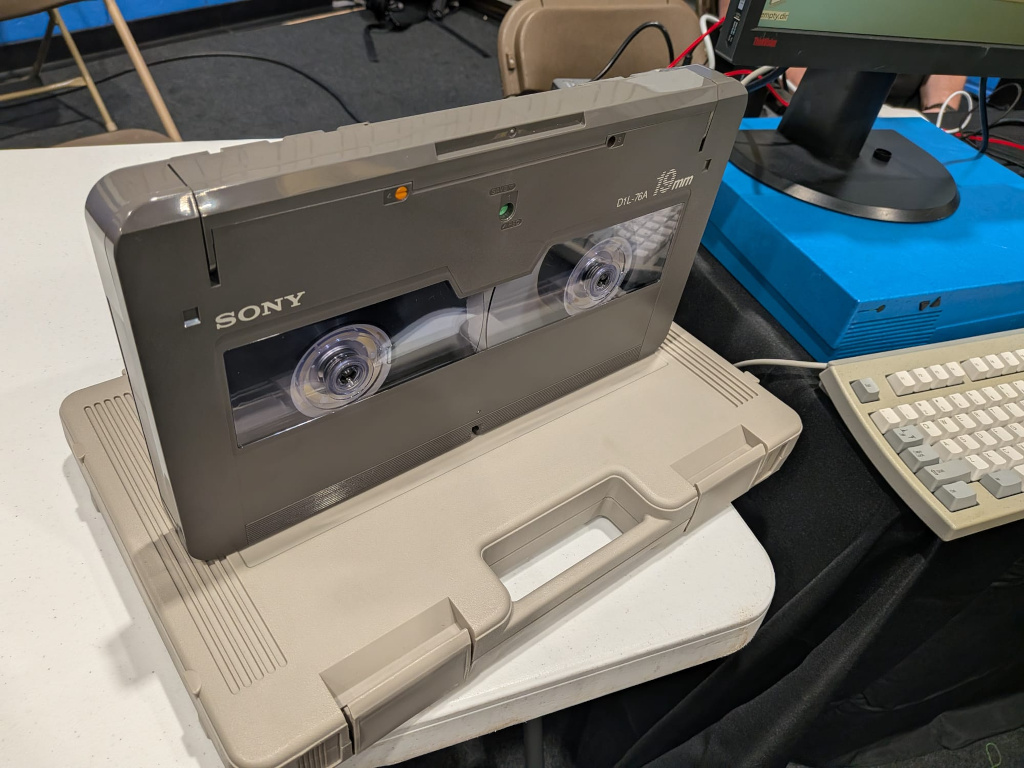
The ReBoot Rewind team was up next. Super fascinating story about recovering the first 3D animated TV series, ReBoot, from master tapes stored on defunct ‘D-1’ media. A story of luck AND perseverance, this involved a multi-year effort of finding then importing some broken machines, rebuilding them, sourcing some spare parts in an overseas garage, and building a pipeline to restore the material. Although I was aware of the show, I didn’t watch it, but this story of a group of people working together on something I found super interesting.
Jason Scott - The Value of Preserving And Sharing
Last for me was Jason Scott, of the Internet Archive, who shared random stories on the value of preserving, including a fun tidbit on rescuing data from a bunch of North Korean karaoke machines. Apparently the archive adds 175 TB a day to their 250 PB collection, and keep three copies!
Unfortunately, I had to skip the talk by Dave Plummer of Dave’s Garage.
Day 2
I did want to spend some time walking the exhibition floor, so I skipped the talk on the TI-99/4A by Gary Bowser to see everyone’s exhibits (more on that below).
Leo Binkowski - The Canadian NABU Networked Home Computer
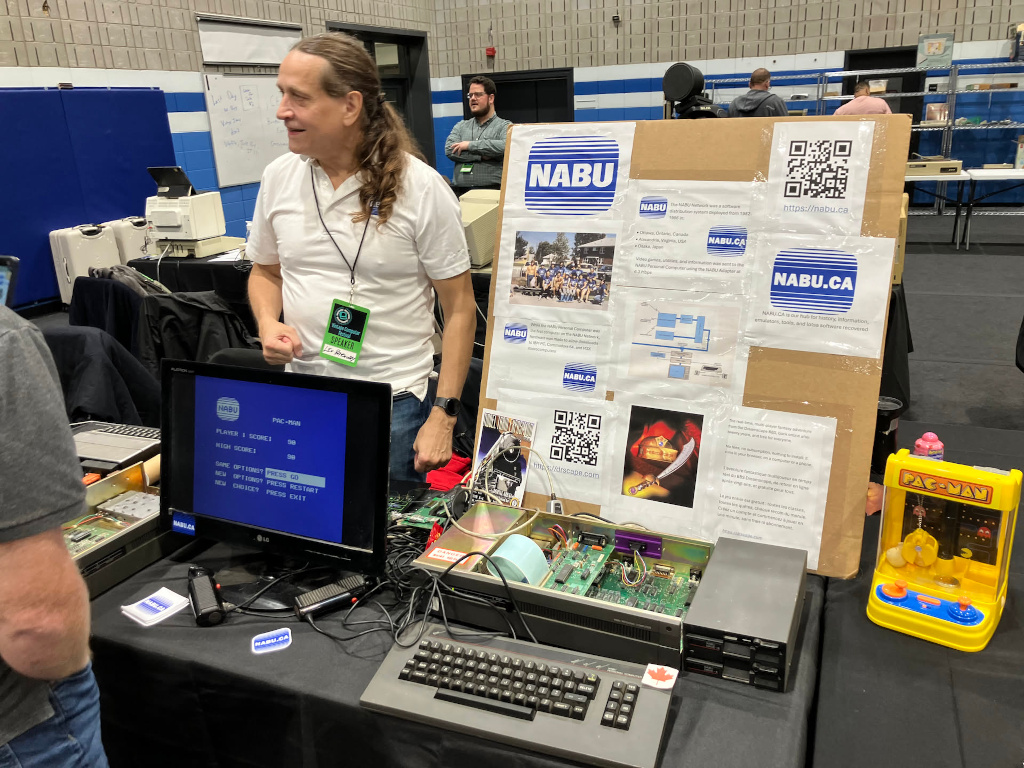
Leo Binkowski talked about his experience working on Canada’s NABU - wikipedia entry, straight out of high school. NABU was a networked home computer from 1983, that was connected to the cable TV network, trialled in Ottawa. A member in my group grew up in Ottawa and actually HAD a NABU system at home growing up, and loved it. Leo has managed to recover a lot of the early software from old floppies and hard drives. There were a few NABU systems on the exhibition floor.
Roberta Williams, Ken Williams and Al Lowe - Sierra Online
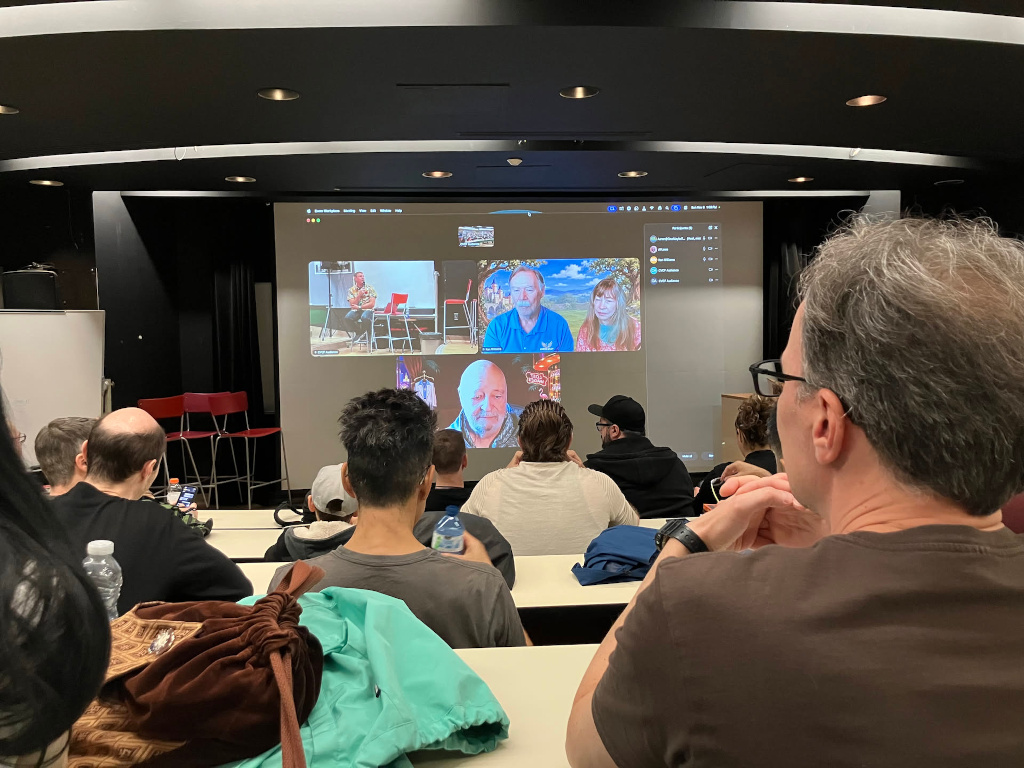
For the last session of the show, organizer Nicolas Mailloux interviewed Roberta and Ken Williams (creators of many adventure games and co-founders of Sierra Online) and Al Lowe (creator of Leisure Suit Larry). I was concerned about it being a videoconference at an “in real life” event, but it worked - you still get interactiveness of a live interview, along with a communal feeling of hearing stories in a room full of passionate people - I expect they’ll post the video: https://cvcfed.org/videos-videos/
Lots of fun stories - I think for me, the idea that the Leisure Suit Larry story was inspired by Al Lowe’s time working in a bar, and Roberta Williams describing the move away from type-in interfaces to click-controls, drawing inspiration from Colossal Cave, and learning along the way.
For anyone interested in Sierra Online and an account of building a software business in the 1980s, I do recommend Ken Williams’ book: Not All Fairy Tales Have Happy Endings.
Exhibits and Photos
A few highlights for me on the show floor.
C64
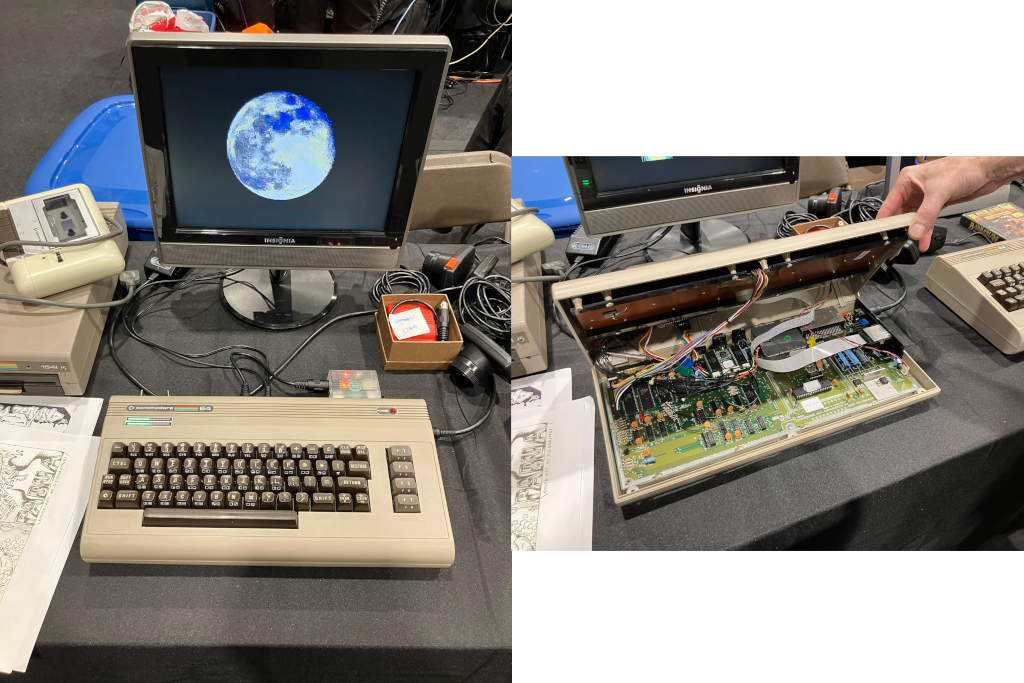
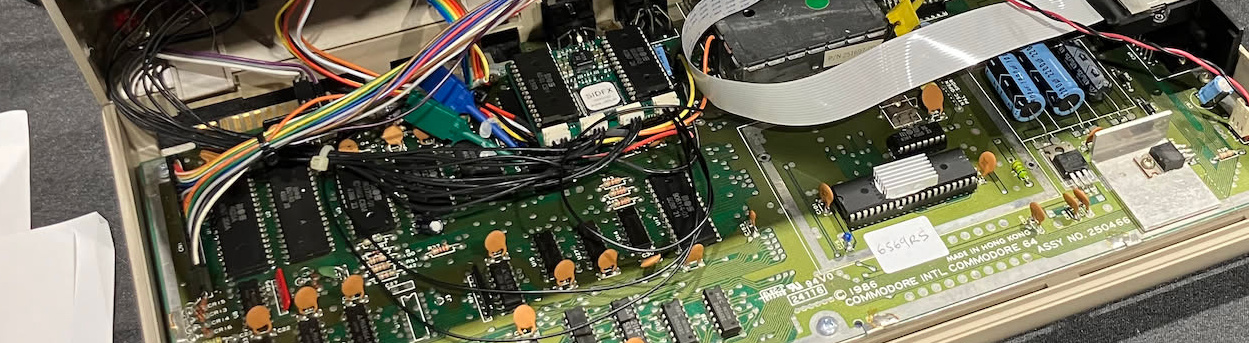
I spent a lot of time on a C64 as a kid - I loved this project that added a 2nd SID chip (the music chip), enabling stereo sound.
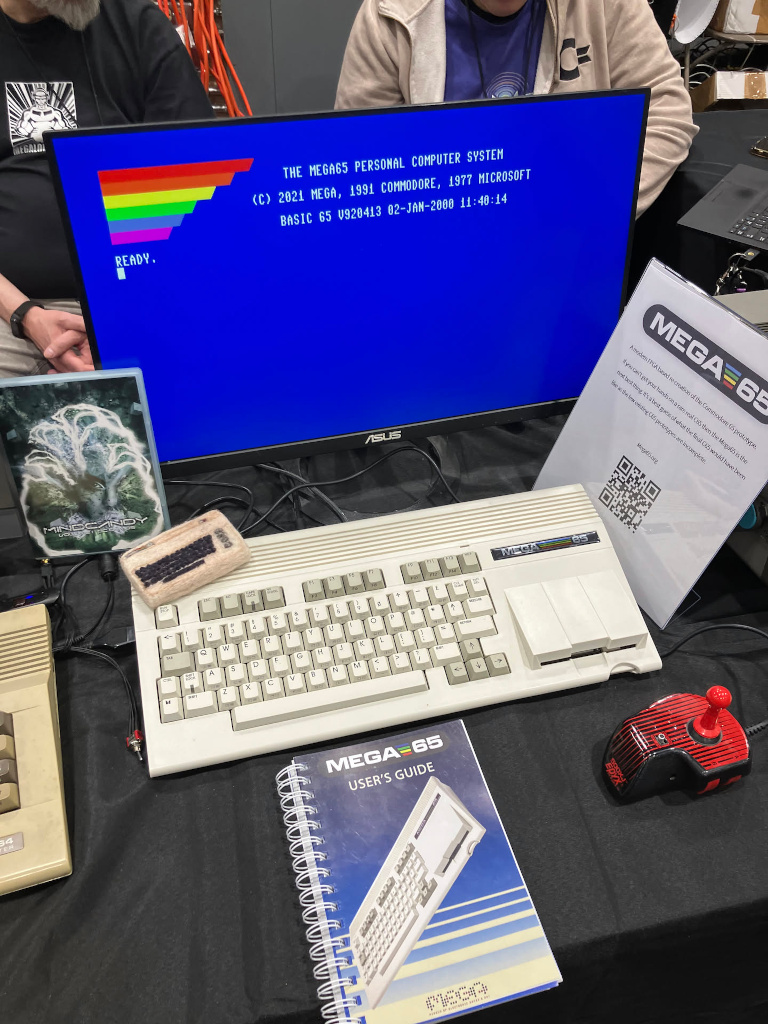
There were a few “fantasy” 8-bit systems on display - 8 bit systems with advanced connectivity and features that never existed in the 1980s. I’d heard of this Mega 65 - I would have loved to play with it and see what it could do, but the exhibitor wasn’t there when I passed by - I’ll have to spend time with it in an emulator sometime.
Televideos
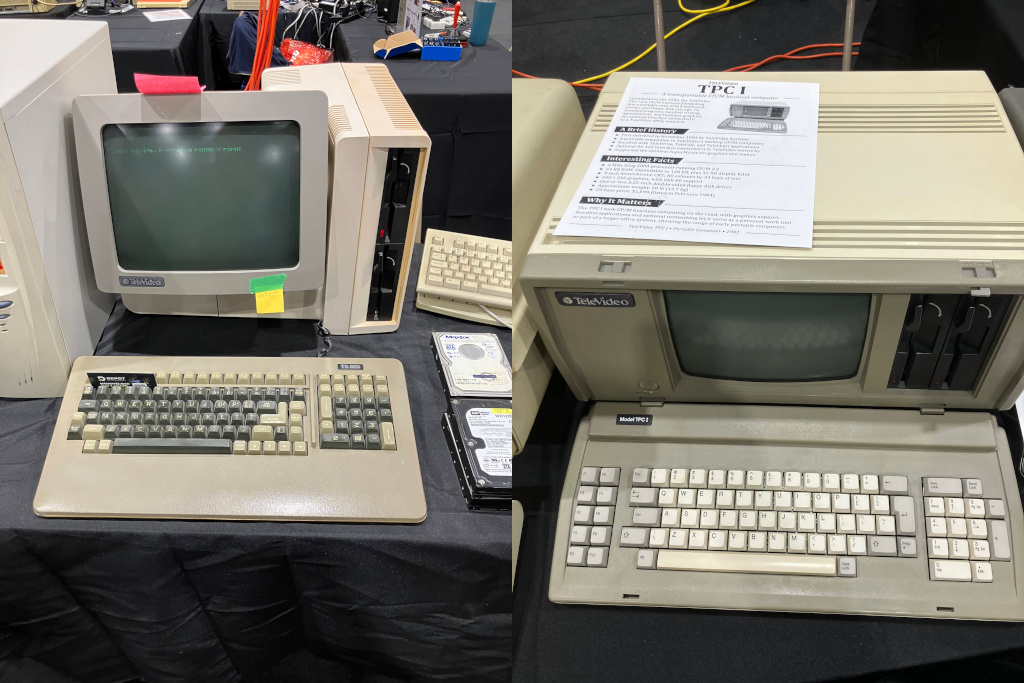
My mother had a TeleVideo 1603 that ran CP/M, that she used to run WordStar and printed things on a connected Daisy Writer daisy wheel printer. It looked pretty cool - JUST LIKE this 803, so I had to snap a photo. And I didn’t know they had a luggable. I typed up a few assignments on a 1603 when in primary school - I just remember WordStar’s controls to be confusing.
Amiga 3400
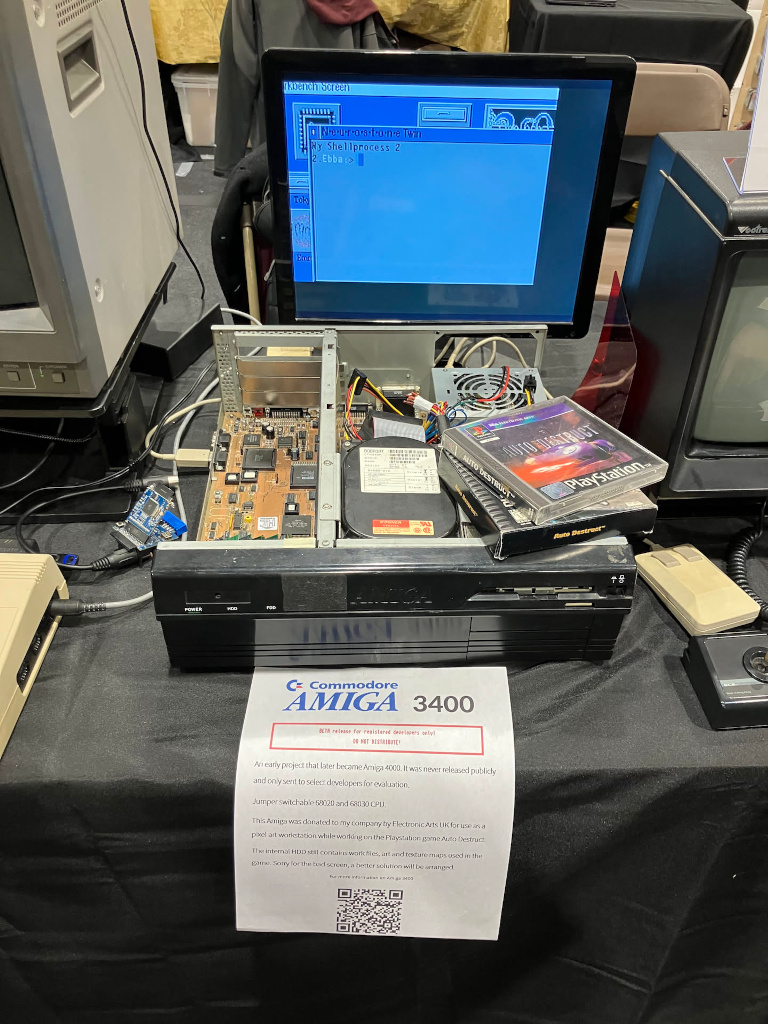
I purchased both an Amiga 500 and an Amiga 3000 with hard earned money in high school, and spent hours on both - I still follow Amiga news, even though I haven’t owned one in 30 years. The Amiga 3400 was a prototype of the Amiga 4000 that Commodore sent to some game development studios. This particular unit was used to create art for Playstation game.
Nintendo Connected to Meshcore
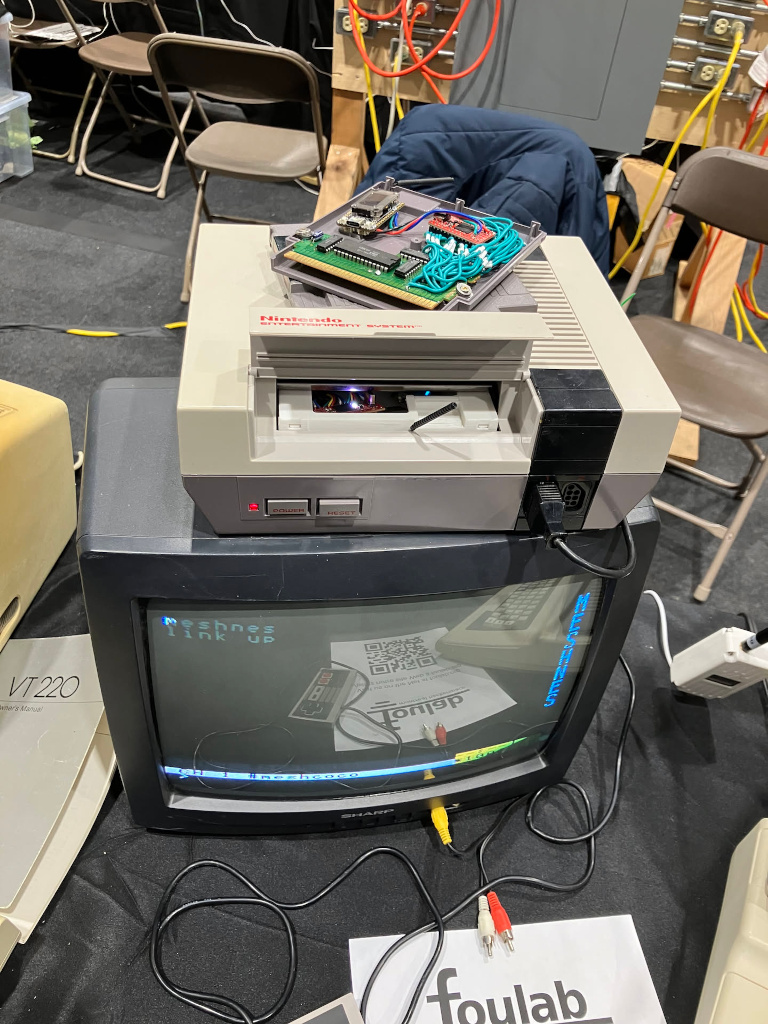
Someone built a custom cartridge to connect his Nintendo to the Meshcore network - I’ve had a lot of fun with LoRa mesh networks, but never with a Nintendo!
Roland MT80 MIDI Boom Box
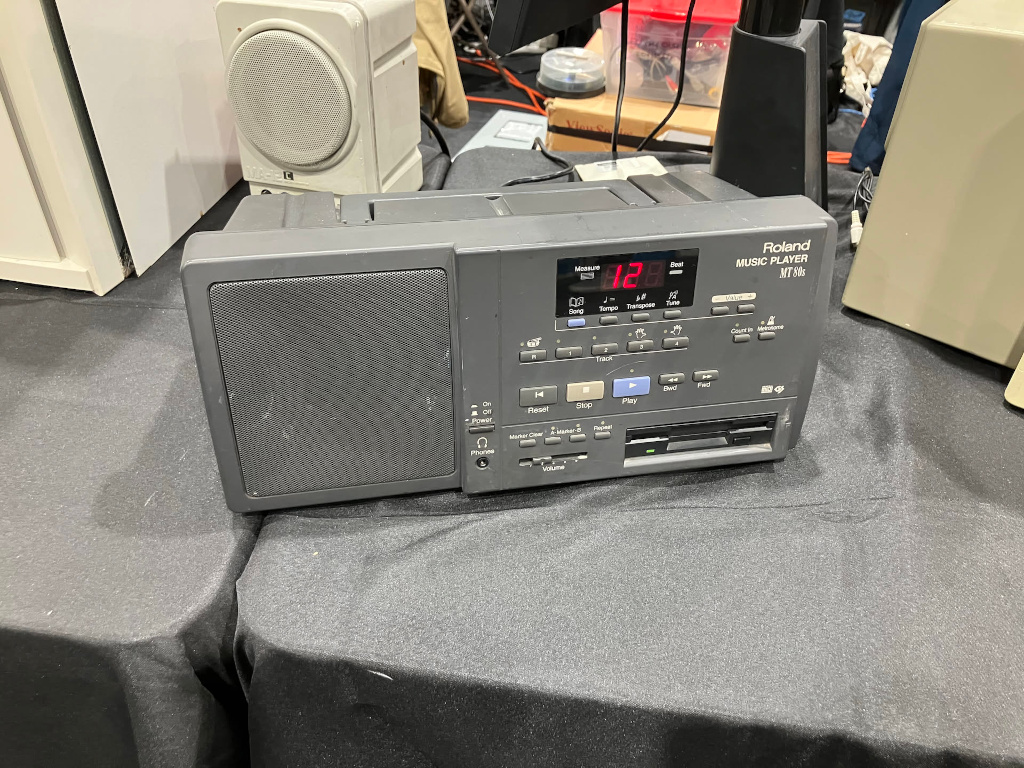
I didn’t know such a device existed - a standalone playback device for MIDI stored on floppies. When I worked at OrganWorks, I saw a number of floppy Yamaha MDF3 MIDI recorder/playback devices - but they required a synth and speakers for playback.
Comterm Max - A Quebec Educational Computer
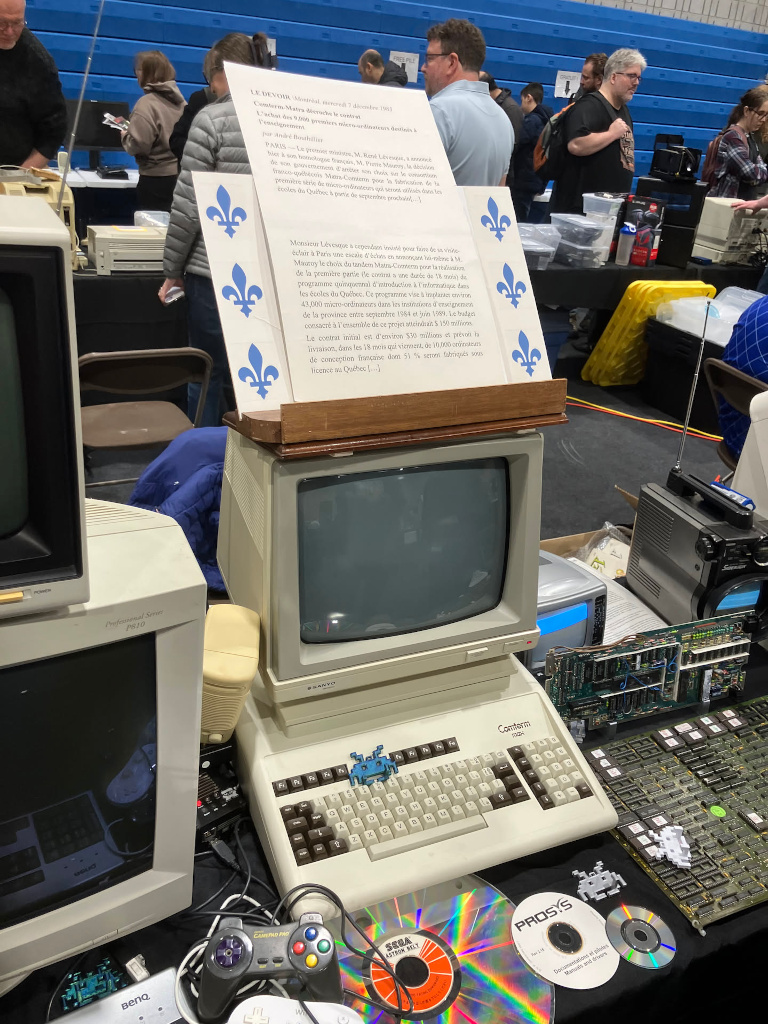
Growing up in Ottawa, my primary and middle schools had ICON educational computers developed by the Ontario Ministry of Education. It was interesting to see that Quebec had a similar machine - unfortunately, I didn’t get to speak to the exhibitor, so I don’t know anything beyond what was printed out.
It’s a bit interesting to think about this exercise, about how all these school systems saw value in enabling access to computers, but not seeing anything suitable on the market and deciding to build something new. I imagine the BBC Micro was the most succsesful of the bunch.
BeBox
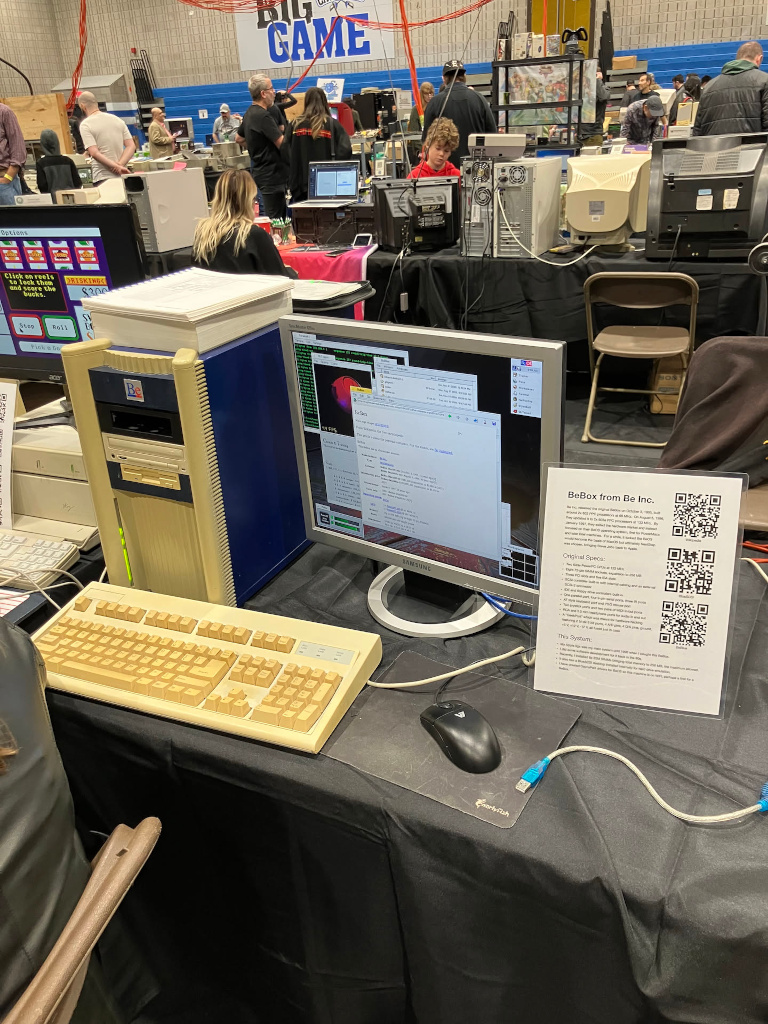
In the late 90s, I installed all sorts of operating systems on my PCs - including BeOS, which was famous for how snappy and responsive it was. I’d heard of, but had never seen, a BeBox, until this one.
The Parking Lot
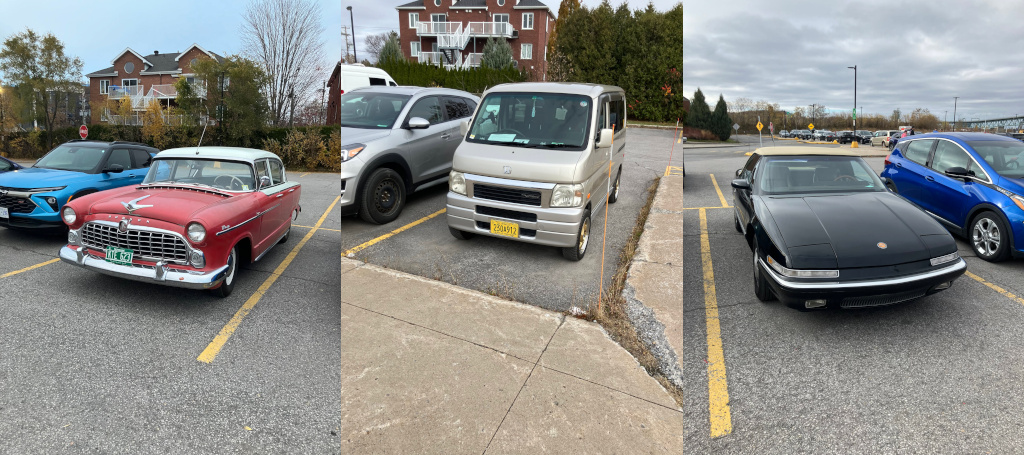
I saw some pretty unusual cars in the venue’s parking lot - I have no idea if these belonged to attendees.
Super Fun
I realize now that I took photos of projects and artifacts I thought were fun without documenting the people behind the cool stuff - everyone was super eager to talk about their projects. I’ll try to make a point to go to future VCFs and more of these types of events.